

Understanding Waldorf Early Childhood Education
A closer look at how rhythm, imaginative play, artistic work, and outdoor life shape the early years at Live Oak.
Waldorf early childhood education is a play-based early childhood education approach that emphasizes rhythm, imaginative play, artistic activity, storytelling, meaningful work, and time in nature. At Live Oak, that approach takes shape across Parent-Child, Preschool, and Kindergarten.
For families who are new to Waldorf, the most helpful question is often not “What is the philosophy?” but “What does this actually look like for my child each day?” The answer is a warm, developmentally paced early childhood experience rooted in play, movement, beauty, routine, and meaningful connection to the natural world.
Families searching for what is Waldorf preschool are often looking for a warm, developmentally paced, screen-free preschool experience that supports imagination, movement, and connection to the natural world.
Visit & Tours Start Your Inquiry Early Childhood
At a Glance
- Parent-Child: Early connection and support for families with young children
- Preschool: A peaceful environment with simple natural materials, imaginative play, artistic exploration, and daily outdoor life
- Kindergarten: A two-year program with a multi-age classroom, storytelling, artistic work, outdoor play, and weekly Nature Day
- Across Early Childhood: Rhythm, imaginative play, artistic activity, meaningful work, and connection to nature
What Waldorf Early Childhood Education Means
Waldorf early childhood begins with a view of the young child as someone who learns deeply through imitation, movement, sensory experience, play, relationship, and rhythm. Rather than rushing children into abstract learning too early, it seeks to nourish the foundations that support healthy development over time.
In practical terms, that means children are given time for imaginative play, meaningful daily routines, artistic work, songs and stories, practical activity, and regular outdoor life. The environment is meant to feel warm, orderly, and human, with teachers guiding the life of the class through steady presence and example.
What This Means in Daily Practice
In a Waldorf early childhood setting, daily life often includes:
- a predictable daily rhythm
- free imaginative play
- circle time, songs, and stories
- artistic and practical activity
- natural materials and a calm environment
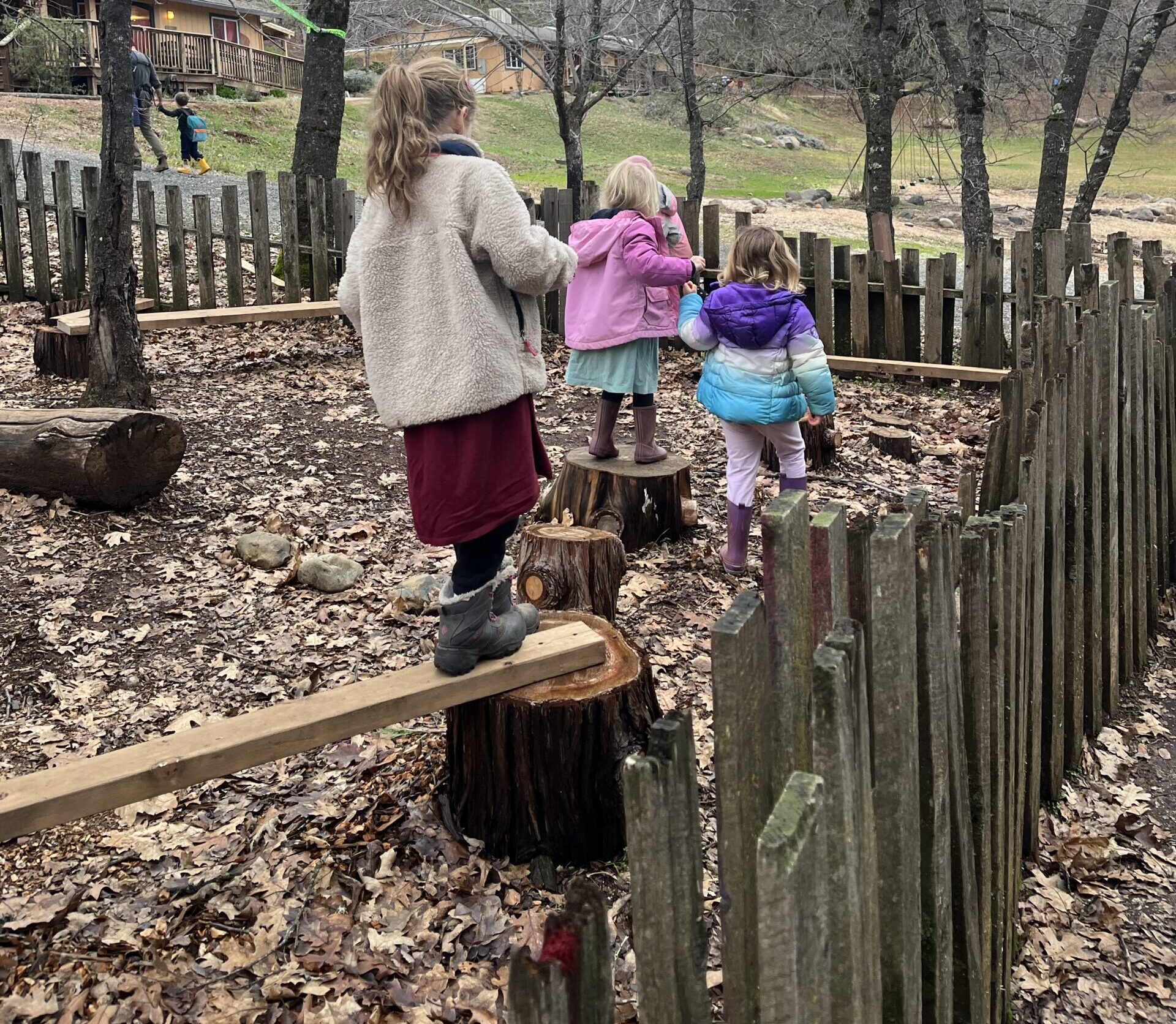
- meaningful time outdoors
The goal is not simply to keep children busy. It is to shape a healthy early childhood experience in which children can play, imitate, explore, move, and grow in a way that matches their stage of development.
Why Play, Rhythm, and Story Matter
Waldorf places strong emphasis on rhythm because young children thrive when daily life feels steady and predictable. Repeated patterns in the day, week, and season help children feel secure and supported.
Imaginative play matters because it allows children to work actively with their own ideas, feelings, and experiences. Story, movement, and artistic work matter because they engage the whole child and support language, attention, creativity, and social development in a natural way.
What Parents Often Notice First
Families new to Waldorf often notice:
- the classrooms feel calm, warm, and less hurried
- there is a strong emphasis on imaginative play
- natural materials are used throughout the environment
- teachers guide the rhythm and atmosphere of the class
- story, art, and movement are part of daily life
- outdoor time is central, not secondary
How This May Feel Different From What Families Expect
Some families come in expecting early childhood programs to focus more heavily on early academics, worksheets, screens, or more explicit skill acceleration. Waldorf takes a different path. It puts stronger emphasis on the foundations that support later learning: imagination, oral language, movement, social growth, self-regulation, and relationship to the world.
This does not mean doing less. It means doing early childhood differently—through an experience designed to be developmentally aligned, deeply human, and rich in play, beauty, and meaningful activity.
If You’re Comparing Waldorf and Montessori
Many families first encounter Montessori, then begin asking how Waldorf is different. Both are thoughtful alternatives to conventional early childhood education, but they often feel quite different in practice. Families who are especially drawn to rhythm, imaginative play, storytelling, artistic work, and nature-rich learning often find Waldorf especially compelling.
What This Looks Like at Live Oak
At Live Oak, these ideas are visible in daily life. Preschool offers a peaceful, uncluttered environment filled with simple natural materials for creative play. Children move through a daily rhythm that includes circle time, artistic explorations, indoor and outdoor creative play, snack, storytime, and lunch, along with regular exploratory hikes beyond the play yard.
Kindergarten builds on that foundation in a two-year, multi-age classroom designed to cultivate confidence, leadership, and readiness for the grades. Children engage in drawing, watercolor painting, baking, handwork, seasonal crafts, woodworking, and beeswax modeling, along with hiking, gardening, outdoor play, and weekly Nature Day on Live Oak’s forty-acre campus.
For families exploring screen-free preschool or nature-based early childhood education, Waldorf often stands out for its strong emphasis on rhythm, imaginative play, artistic life, and meaningful outdoor experience.
Preschool Kindergarten From Preschool to Kindergarten Waldorf Kindergarten Readiness
Who May Be Drawn to This Approach
Waldorf early childhood may resonate with families looking for:
- a screen-free early childhood
- strong imaginative play
- warm teacher-child relationships
- a developmental pace
- regular outdoor time
- a rich artistic and story-centered environment
FAQ
What is Waldorf early childhood education?
It is a play-based, relationship-centered approach that emphasizes rhythm, imaginative play, artistic activity, storytelling, meaningful work, and time in nature.
Is Waldorf play-based?
Yes. Free imaginative play is central in the early years, supported by rhythm, story, movement, artistic work, and a warm classroom environment.
Does Waldorf delay academics?
Waldorf early childhood places stronger emphasis on the developmental foundations that support later learning, including imagination, oral language, movement, self-regulation, and social growth.
Why are rhythm and routine so important?
Rhythm helps young children feel secure, supported, and able to participate more fully in daily life.
What does a Waldorf classroom feel like?
Families often describe Waldorf classrooms as calm, warm, imaginative, artistic, and less hurried, with strong teacher presence and meaningful time outdoors.
Can we visit and see it in person?
Yes. Private tours are available year round, and Info Sessions are also a good way to begin learning more.
Quick Links
Booking a visit? Start here.
Ready to apply? Submit an inquiry.